Professional Marketing Made Easy: Business Rack Card Templates
In the fast-paced world of small business marketing, standing out at a trade show or local shop counter is a genuine challenge. You have about three seconds to grab a potential customer's attention before they walk past your display. This is exactly where the tangible, high-impact nature of a well-designed rack card comes into play. Unlike a standard flyer that often gets folded and stuffed into a pocket, the 4x9 inch format is distinct, sturdy, and purpose-built for vertical displays. However, creating a layout that balances text and imagery effectively from scratch can be a massive time sink, especially for busy entrepreneurs and content creators. That is why having access to high-quality Business Rack Card or DL Flyer Templates is not just a convenience; it is a strategic asset for anyone serious about their local or digital marketing efforts.
These templates are designed to bridge the gap between amateur efforts and professional agency work. They are fully editable, well-organized, and utilize free fonts, which removes the barrier of expensive software subscriptions or licensing headaches. Whether you are a designer looking to speed up your workflow or a business owner trying to launch a new service quickly, these templates provide the structural backbone you need. Let us dive into how you can leverage these design assets to elevate your brand identity and maximize your marketing reach.
Understanding the 4x9 Format and Its Visual Appeal
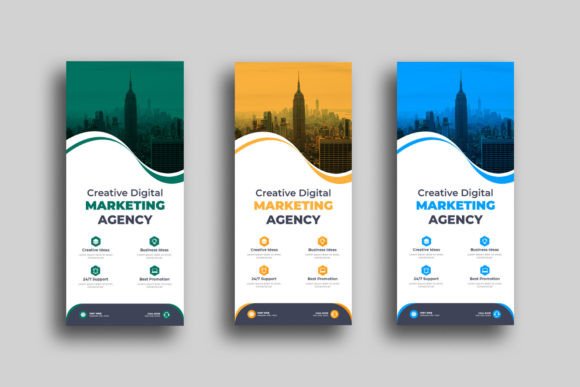
The specific dimensions of 4x9 inches are not arbitrary; they are the industry standard for countertop displays, brochure holders, and wide-format flyers. This elongated aspect ratio creates a unique canvas that encourages vertical hierarchy. When you open these Business Rack Card or DL Flyer Templates, you will notice that the visual personality is built around clarity and flow. The "well-organized" nature of the files means that layers are named logically, allowing you to easily isolate elements. This is crucial for maintaining a clean, modern typography aesthetic. A cluttered file often leads to a cluttered design, but these templates are structured to guide the eye from the headline down to the call to action.
The overall appeal of these specific templates lies in their adaptability. While they come with a specific aesthetic, they act as a blank slate for your brand identity. The use of AI (Adobe Illustrator) and EPS files ensures that the vector quality remains crisp at any resolution. This means whether you are printing on high-gloss cardstock at a local printer or sending the file to a large-format digital service, your design assets will not pixelate. For a graphic designer, this vector-based approach is essential for logo design integration. You can easily scale your company logo or adjust the layout without losing the integrity of the lines and shapes.
Practical Applications: Where Design Meets Strategy
So, who exactly benefits from these templates? The short answer is everyone involved in visual communication, but let us break down the real-world value for specific groups. For entrepreneurs and small business owners, these templates are a lifesaver for local marketing. Imagine you are launching a new menu for a café, a seasonal service for a landscaping company, or a new package for a consulting firm. Instead of hiring a designer for a quick job, you can edit the text, swap out the placeholder images (noting that images are not included in the main file, which keeps the file size manageable), and have a print-ready PDF in an hour.
For marketers and content creators, the DL flyer format is perfect for digital integration. While the primary purpose is print, the 4x9 size works beautifully as a "story" graphic on social media or as a sidebar element on a website. You can use these templates to create consistency across your channels. For example, a rack card displayed at a networking event should share the same visual DNA as the Instagram story you post that same day. This consistency reinforces brand perception and makes your business look established and professional.
Furthermore, crafters and hobbyists often overlook the power of professional templates for their personal projects. If you are selling goods at a farmer's market or a craft fair, a polished rack card adds a layer of legitimacy to your booth. It signals to the buyer that you take your craft seriously. The "free font used" feature is particularly helpful here, as it ensures you do not need to purchase expensive commercial fonts just to edit the template. You can focus on the content and the craft, rather than the technical logistics of font licensing.
Design Principles: Readability and Hierarchy
One of the most critical aspects of working with any template is understanding visual hierarchy. The creators of these Business Rack Card or DL Flyer Templates have already established a baseline hierarchy, but you need to know how to maintain it when you edit the content. The 4x9 format is tall and narrow, which means you have limited horizontal space. This is where modern typography principles come into play. You cannot cram long paragraphs of text onto a rack card; it needs to be scannable.
When you edit the text, focus on headlines that pop. Use the provided font pairings as a guide. Usually, a display font is used for the header to grab attention, while a sans serif or serif font is used for the body copy to ensure readability at small sizes. If you decide to change the fonts, ensure that your new choices offer sufficient contrast. For instance, pairing a heavy, bold header with a light, airy body text creates a natural rhythm that guides the reader's eye. Avoid using script fonts for body text, as they are notoriously difficult to read in small blocks, especially on textured paper.
Color is another major factor. These templates likely use a specific color palette, but you will want to adapt it to your brand colors. Be mindful of contrast ratios. Light grey text on a white background might look "minimalist" on screen, but it can be completely illegible when printed on standard office paper. Always test your color choices for readability. The goal is to influence the audience's engagement without making them squint. A professional rack card should feel effortless to read; the friction should be removed so the message can land effectively.
Maximizing Your Design Assets: File Formats and Workflow
The inclusion of 3 AI files and 3 EPS files in this package is a significant advantage. Adobe Illustrator (AI) is the gold standard for vector editing, but the EPS format ensures compatibility with other software like CorelDRAW, Affinity Designer, or even older versions of Illustrator. This flexibility is vital for a diverse user base. If you are a designer handing these files off to a client who uses a different software ecosystem, the EPS format ensures they are not left stranded.
When you open the files, take a moment to look at the layers panel. A "well-organized" file will have groups for the background, images, text, and logos. This organization is a massive time-saver. Instead of clicking through hundreds of ungrouped elements, you can simply lock the background layer and focus on the text. This level of organization also helps if you need to create variations of the same card. For example, if you want to create three versions of a flyer for different locations, you can duplicate the artboard and quickly change the location-specific details without disrupting the overall design.
Remember the note that images are not included in the main file. This is standard practice for premium templates and actually works in your favor. Stock photography can bloat file sizes and often comes with its own licensing restrictions. By providing the template without images, the file remains lightweight and fast to load. It also forces you to use your own high-quality photography or curated stock images, which ensures that your final product is unique to your brand. Generic stock photos are easy to spot and can cheapen the perception of your business; using your own imagery builds authenticity and trust.
Tips for Choosing the Right Template and Final Polish
Choosing the right template from a collection of three can be daunting, but it comes down to your content density. Look at the "white space" in the design. If you have a lot of information—say, a list of services, pricing, and contact details—choose the template with a more structured grid and more text placeholders. If your approach is more visual and you rely on a single powerful image and a slogan, choose the layout with the larger image frame. The template should serve the content, not the other way around.
Once you have edited the template, the final step is proofing. Never print a large batch without first printing a single test copy. Check for spelling errors (the spellchecker in Illustrator is not infallible), check the alignment, and ensure the colors look correct on paper. Digital screens emit light, while paper reflects it; colors often look darker and less vibrant when printed. If you are using this for a DL flyer that will be handed out, consider the paper stock. A heavier stock (like 100lb gloss cover) will feel more substantial and professional than standard 20lb copy paper, reinforcing the quality of your brand.
In conclusion, these Business Rack Card or DL Flyer Templates are more than just pre-made layouts; they are a toolkit for professional communication. By leveraging the editable AI and EPS files, utilizing the free fonts, and applying sound design principles regarding hierarchy and readability, you can produce marketing materials that rival those of expensive agencies. Whether you are a blogger promoting a workshop, a small business owner launching a sale, or a designer streamlining your production process, these templates provide the structure and flexibility needed to succeed in a crowded marketplace.