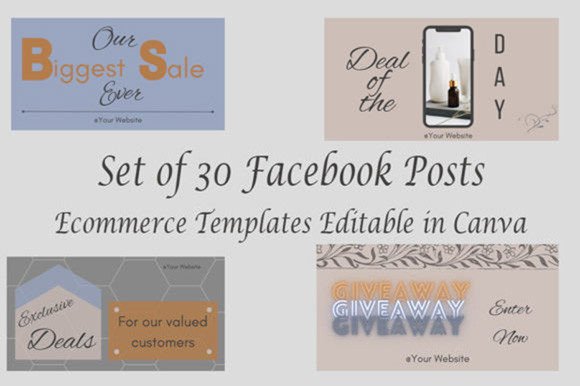
Transform Your Facebook Feed: The Power of Cohesive Ecommerce Design
In the crowded space of social media marketing, consistency is the currency of brand recognition. For ecommerce business owners, the struggle to produce daily, high-quality content that actually converts can be exhausting. You know your product is great, but translating that value into a visually appealing Facebook post requires design skills, time, and creative energy that are often in short supply. This is where the concept of Facebook Post Templates Ecommerce 30 shifts from being a "nice to have" asset to a fundamental part of your marketing strategy. It is not just about having a pretty picture; it is about establishing a visual system that makes your brand look authoritative and trustworthy at a glance.
Visual Characteristics and the "Nature-Inspired" Aesthetic
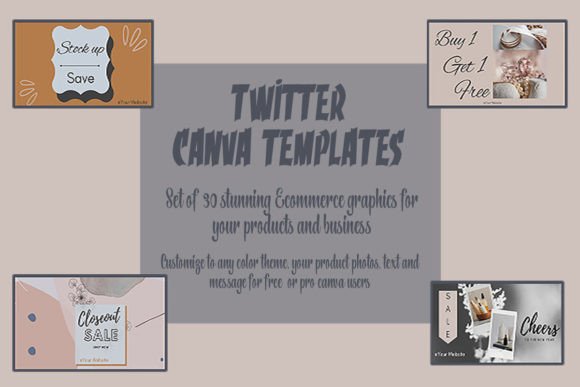
When we talk about design assets, the aesthetic is everything. The Facebook Post Templates Ecommerce 30 collection is defined by a specific visual personality that moves away from the garish, neon-bright colors often seen in aggressive sales tactics. Instead, this set draws inspiration from a color palette found in nature. We are looking at earthy tones, muted pastels, and organic hues that evoke a sense of calm, reliability, and modern sophistication.
This specific style works exceptionally well because it allows the product to breathe. Unlike templates that scream for attention with heavy borders and chaotic layouts, these designs utilize negative space and clean lines. The "nature-inspired" palette acts as a neutral canvas. Whether you are selling handmade ceramics, digital courses, or boutique clothing, these colors do not clash with your product photography. Instead, they complement it. The personality of this template set is approachable yet professional—it feels curated rather than mass-produced, which is exactly the perception you want your buyers to have about your brand.
Strategic Applications: Beyond the Facebook Feed
While the primary function of this set is social media graphics, a savvy marketer looks at the versatility of their design assets. The structure of the Facebook Post Templates Ecommerce 30 is built on strong visual hierarchy. This means the placement of text, the ratio of image to white space, and the flow of information are optimized for engagement. You can leverage this hierarchy across various facets of your business.
For instance, the "square" format (1080x1080) is the universal language of social media. These templates are perfectly suited not just for your Facebook feed, but for your Instagram grid as well. Maintaining a cohesive style across both platforms is crucial for brand identity. If a customer follows you on Instagram and then clicks through to your Facebook page, the transition should be seamless.
Furthermore, the modern typography and layout principles used in these designs can inspire your web design and editorial design efforts. You might use a specific layout from the set to design a "New Arrivals" banner for your website homepage. Or, you could adapt the text-heavy templates for packaging design inserts or thank-you cards included in your shipments. The goal is to create a world for your customer, and using these templates as the cornerstone of that visual world ensures that your brand looks polished whether the customer is scrolling on a phone or opening a box.
Practical Guidance for Customization and Brand Consistency
The real power of Facebook Post Templates Ecommerce 30 lies in its editability within Canva. However, simply dragging and dropping a photo into a frame is not enough to create a brand strategy. To get the most out of this collection, you need to approach the customization process with intention.
1. Typography and Font Pairing:
While the templates come with suggested fonts, you should always swap them out for your own brand identity fonts. If your brand uses a sans serif font for headers to appear modern and clean, apply that consistently across all 30 templates. If you have a script font or handwritten font for accents, use it sparingly. The goal is to turn these generic templates into proprietary assets. Good font pairing—combining a bold header font with a legible body font—will determine how readable your posts are on mobile devices.
2. Color Palette Integration:
The "nature-inspired" default palette is beautiful, but you need to make it yours. Use Canva’s color picker to replace the background colors with your specific brand hex codes. If your brand is high-energy, you might keep the neutral backgrounds but change the text accents to a vibrant brand color. This maintains the professional layout of the premium font and template design while reinforcing your specific logo design colors.
3. Testing for Readability:
A common mistake in social media graphics is prioritizing style over substance. When you drop your product photos into these frames, ensure the background image doesn't make the text unreadable. Use the overlay features in Canva to darken the image slightly behind the text, or use the provided text boxes that have solid backgrounds. Readability is the single most important factor in whether a user stops scrolling or keeps moving. If they have to squint to read your sale price or your caption, you have lost the conversion.
4. Commercial Licensing and Usage:
For small business owners and entrepreneurs, understanding usage rights is vital. These templates are designed for commercial use, meaning you can use the graphics you create to sell your products. However, you cannot resell the template files themselves to other designers. This protects your investment. You are buying the right to create unlimited social media graphics for your own business, which offers an incredible return on investment compared to hiring a designer for every single post.
Maximizing Engagement with Visual Hierarchy
The layout of the Facebook Post Templates Ecommerce 30 is not random; it is engineered to guide the viewer's eye. This is the essence of visual hierarchy. By utilizing these pre-planned structures, you are essentially borrowing the expertise of a professional brand strategist.
For example, look at how the templates separate the "hook" (the main headline) from the "offer" (the price or call to action). When you customize these, respect that hierarchy. Don't try to cram a paragraph of text into a space designed for three words. By adhering to the template's structure, you ensure that your message is digested quickly. In the fast-paced environment of Facebook, you have about 1.3 seconds to make an impression. These templates are optimized for that split-second decision-making process, helping to increase your click-through rates and ultimately, your sales.